How Often Do Commercial Drains Need Cleaning?
If you run a commercial kitchen, manage a multi-storey office block, or look after a busy retail car park, waiting until a drain overflows is the most expensive way to manage your pipework. A backed-up grease trap or flooded customer toilet on a Friday night means closing your doors, losing takings, and paying emergency call-out rates. Here is the straight answer on how often commercial drainage systems actually need servicing, what the law expects of you, and what happens on the day when our engineers visit.
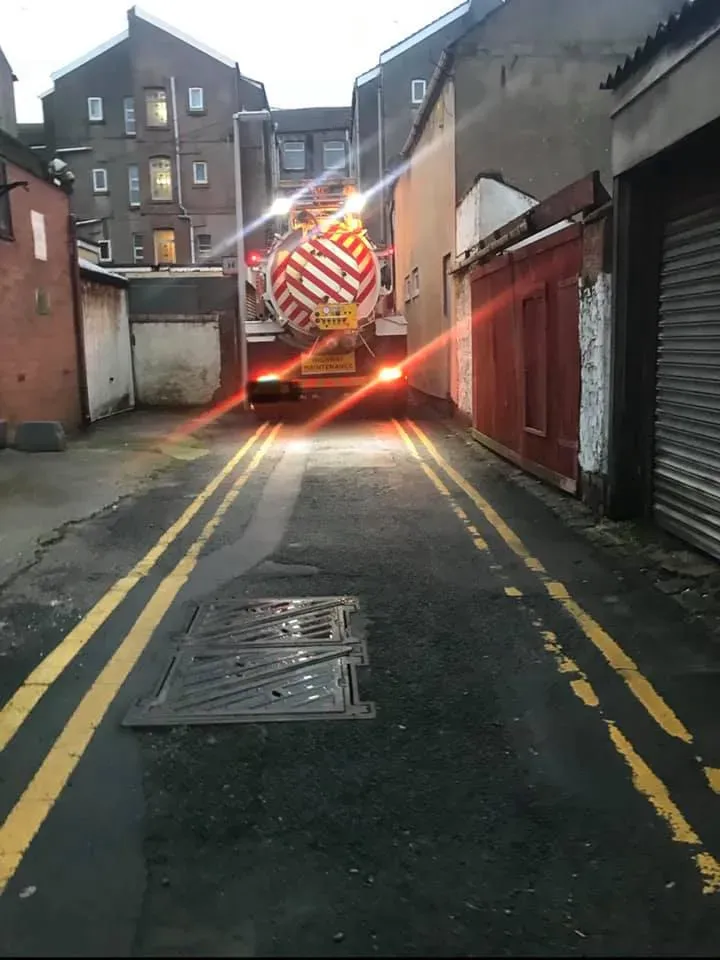
Quick-Reference Commercial Cleaning Schedule
Every building takes a different load, depending on footfall and what goes down the plug. However, after 30 years of clearing commercial lines across Merseyside, these are the practical intervals that keep businesses flowing and environmental health officers satisfied.
| Drainage Asset | Typical Site Type | Recommended Frequency | Main Cause of Failure |
|---|---|---|---|
| Under-Sink Compact Grease Traps | Cafés, takeaways, small bars | Every 2 to 4 Weeks | Baffles choking with solid fat and food scraps, sending foul smells back through kitchen plugholes. |
| External Underground Grease Interceptors | High-volume restaurants, hotels, hospitals, care homes | Every 1 to 3 Months | Solidified crust of fat, oil, and grease (FOG) exceeding the 25% chamber capacity rule and escaping into the main sewer. |
| Main Kitchen Foul Runs | Hospitality venues, food production units, school canteens | Every 3 to 6 Months | Warm emulsified grease cooling down 15 metres downstream and setting like concrete on pipe walls. |
| Vertical Soil & Foul Stack Pipes | Multi-storey offices, apartment blocks, hotels | Every 12 to 24 Months | Hard uric scale, limescale, and wet wipes narrowing the internal bore of cast-iron or plastic stacks. |
| Car Park Gullies & Linear Channels | Retail parks, supermarkets, industrial yards, coastal sites | Every 6 Months (Spring & Autumn) | Silt, windblown sand, autumn leaves, and packaging compacting in the sump pot below the outlet level. |
How Often Should Commercial Grease Traps Be Cleaned?
In the trade, we work to the 25% rule. Once the combined layer of floating fat, oil, and grease (FOG) at the top of the chamber and the settled food sludge at the bottom reaches a quarter of the trap's total liquid depth, the trap stops working properly. Beyond that point, incoming hot wash water simply pushes raw grease straight underneath the outlet baffle and out into the main drain run.
For a busy restaurant kitchen in Liverpool City Centre or the Baltic Triangle serving hundreds of covers a week, an internal dosing or passive trap usually hits that 25% mark within 4 weeks. Larger underground interceptors outside hotels or takeaways can typically go 8 to 12 weeks between pump-outs.
What Happens During a Proper Grease Trap Service?
Skimming the top crust off with a ladle does not count as servicing a trap. The settled food waste at the bottom rots anaerobically, producing hydrogen sulphide gas. That gas smells like rotten eggs and turns into sulphuric acid, which eats through concrete chambers and corrodes metal baffles.
- ✓ Full vacuum extraction: We suck out the entire contents of the chamber—top crust, middle greywater, and heavy bottom silt.
- ✓ Wall and baffle scraping: We scrape hardened fat deposits off the inlet/outlet T-pieces, side walls, and removable baffle plates, then check the neoprene lid seals so odours cannot leak into the kitchen.
- ✓ Downstream high-pressure jetting: While the chamber is open, we run a high-pressure water jetting hose down the outlet line to clear any emulsified soap and fat that has slipped past the trap.
- ✓ Re-charging and waste paperwork: We refill the trap with clean cold water so the baffles immediately function again, sanitise the work area, and issue a Waste Transfer Note for your compliance file.
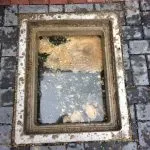
Heavy FOG (fat, oil, and grease) accumulation inside an external commercial inspection chamber before high-pressure jetting.
The Law, United Utilities & Fines
Under Section 111 of the Water Industry Act 1991, it is a criminal offence to discharge anything into a public sewer that interferes with the free flow of wastewater. If United Utilities traces a street sewer blockage or local flooding back to solidified fat coming from your commercial connection, they will recharge the full cost of their tanker crews and excavation teams to your business—and can pursue prosecution.
Additionally, Approved Document H of the Building Regulations states that commercial hot food premises should have an effective grease separator installed and maintained, and local council Environmental Health Officers regularly ask to see grease trap servicing records and Waste Transfer Notes during food hygiene inspections.
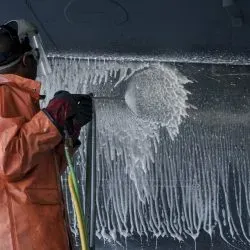
Foul Stack Pipes & Urinal Runs (Every 12–24 Months)
In multi-storey buildings, hotels, and busy office blocks, the vertical soil stacks and horizontal urinal waste pipes suffer from a completely different problem: hard calcified scale. Over months of heavy use, uric acid from urinals reacts with minerals in the water to form a rock-hard crust along the bottom and sides of the pipe.
A 100mm stack pipe can easily choke down to the width of a garden hose. Once the internal bore becomes rough and narrow, paper towels, sanitary products, or heavy toilet tissue snag on the scale, backing sewage up into the lowest floor's washrooms.
Chemical drain cleaners barely touch thick uric scale. We clear these runs every 12 to 18 months using rotary mechanical descaling chains and controlled high-pressure water jetting heads. This mills the calcified scale right back to the bare plastic or cast-iron wall without damaging the pipe joints.
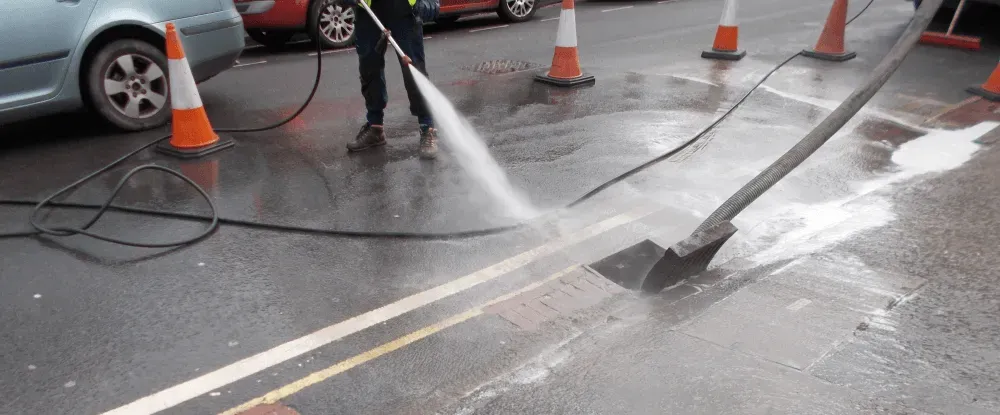
Car Park Gullies & Surface Channels (Twice a Year)
Retail parks, loading bays, and pub car parks rely on deep-trapped road gullies and slotted linear channels (Aco drains) to take heavy rainwater away before it ponds across walkways or floods into ground-floor stockrooms.
Every gully has a deep sump pot beneath the outlet pipe designed to catch heavy grit so it does not wash into the main storm sewer. Once that sump fills to the lip of the outlet pipe, silt, crisp packets, cigarette ends, and dead leaves wash straight into the underground lateral pipe and pack solid. On coastal commercial sites around Southport, Crosby, and Formby, windblown sand fills these sumps in half the time.
We recommend cleaning external gullies and linear channels twice a year: once in late autumn after the leaves have dropped, and again in spring to remove winter grit and road salt before summer downpours arrive.
What to Expect When We Service Your Commercial Drains
We know you cannot have high-pressure hoses trailing through a dining room during lunch service or an inspection chamber lifted outside your main entrance while customers are arriving. Here is how we handle planned maintenance visits so your staff barely notice we have been.
Out-of-Hours Scheduling
We book commercial jetting and grease trap emptying around your trading hours—typically early mornings (6:00 am to 9:00 am) before kitchen prep starts, or late evenings after lock-up. Most routine PPM visits take between 60 and 90 minutes on site.
Clean Working & Containment
Manhole chambers are coned and barriered off. We use heavy-duty hose guides to protect door frames and flooring, contain all foul waste, and wash down and disinfect chamber surrounds and kitchen floors before packing the van.
CCTV Check & Clear Reporting
After jetting a problem line, we push a self-levelling CCTV camera down the run to verify the pipe walls are 100% clear of fat or scale and check for displaced joints or tree roots. You get a plain-English report and compliance paperwork for your landlord or insurer.
Need a Tailored Commercial Maintenance Plan?
Read more about how we set up scheduled maintenance contracts on our Commercial Drain Maintenance page, or give our engineers a ring for a straightforward site assessment.
Related Services & Guides
Practical drainage advice and commercial services from the team at Liverpool One Drainage.
Commercial Drain Maintenance in Southport
Professional commercial drain cleaning and maintenance in Southport. We provide 24/7 PPM contracts, grease trap servicing, and stack pipe descaling.
Who Is Responsible for a Blocked Drain or Sewer?
Find out if a blocked drain is your private responsibility or covered by United Utilities. Learn how to check shared runs and manholes before you pay.
How Much Does a Pre-Purchase Drain Survey Cost?
Find out what affects the price of a pre-purchase CCTV drain survey, what a technical report includes, and how buyers use findings to negotiate house prices.
Drain Relining vs Digging Up: Which Fix Is Best?
Find out when a cracked drain can be fixed with a no-dig resin liner and when a collapsed pipe needs open-trench excavation, with honest cost advice.
Do Drain Rat Blockers Actually Stop Rats?
Find out how stainless-steel drain rat blockers stop sewer rats entering your home without blocking toilet flow, why plastic flaps fail, and where to fit one.
Book Your Commercial Drain or Grease Trap Service
Do not wait for a peak-hour kitchen backup or a foul smell in your customer dining area. Speak directly to an experienced engineer at Liverpool One Drainage for honest advice, transparent upfront pricing, or 24/7 emergency unblocking across Merseyside.