Do Drain Rat Blockers Actually Stop Rats?
The short answer is yes—provided you fit a heavy-gauge stainless-steel valve into the right inspection chamber and seal off any broken branch lines first. Here is a straightforward look at how mechanical rat flaps work inside your drains, why cheap plastic versions fail, and how we stop sewer rats reaching your wall cavities for good.
Quick Trade Summary: What You Need to Know
Do they cause blockages?
No, not when sized and seated properly. The hinged stainless-steel flap sits in the outgoing pipe and lifts smoothly whenever you flush the toilet, allowing water and paper to pass freely.
How long does fitting take?
A standard domestic inspection and rat valve installation takes around 60 to 90 minutes on-site, including running a camera up the line to verify there are no hidden rat runs.
Why did poison fail?
Poison only kills the one or two rats currently inside your loft or kitchen voids. Until you physically block the open sewer pipe they are climbing up, new rats from the main street sewer will replace them.
How a Mechanical Drain Rat Blocker Works
If you can hear scratching inside your cavity walls, beneath the floorboards, or up in the loft—and a pest controller cannot find any gaps in your external brickwork or air bricks—the rats are almost certainly coming up through your drainage system. Rats are strong swimmers and easily travel from the main public sewer into the smaller 100mm or 150mm private drain runs serving your home.
A drain rat blocker (often called a non-return valve or rat flap) is a mechanical cylinder made from marine-grade stainless steel. We compress the unit and slide it inside the pipe mouth inside your manhole inspection chamber. Once released, strong tension springs lock the steel housing tightly against the inner walls of your clay or plastic pipe.
Inside the housing sit two angled, serrated flaps. When you flush a toilet or drain a bath, the weight of the water pushes the top flap open cleanly so waste washes straight out to the main sewer. As soon as the flush passes, gravity drops the flap shut against a mechanical stop. If a rat swims up from the street sewer and tries to push its nose under the flap, the serrated steel teeth lock firmly down, completely blocking its path into your property's pipes.
Why We Only Fit Stainless Steel
Acid-resistant 316 stainless steel cannot be gnawed through by rats. It also resists the corrosive gases and damp conditions inside foul sewers, meaning the hinge pins will not rust shut or snap off after a couple of winters.
The Problem With Plastic Flaps
Cheap plastic non-return valves sold online are mainly designed for flood backflow rather than vermin. A determined sewer rat can chew straight through a plastic flap in a single night, leaving broken plastic edges that snag toilet paper and block your drain.
Do Rat Blockers Cause Toilet Paper Blockages?
Homeowners rightly worry that putting a metal flap inside a toilet drain might catch waste and cause the manhole to back up. In our experience over the last 30 years, a rat blocker only causes a blockage if it is fitted poorly or pushed into a damaged pipe.
Before we install any valve, we inspect the pipe collar where the blocker will sit. In older salt-glazed clay drains, lime scale, hardened fat, or displaced mortar joints can leave a rough lip along the bottom of the pipe. If you push a rat blocker over a rough lip, the flap cannot sit flush and toilet tissue will catch underneath it.
We clean and descale the pipe inlet first so the steel sleeve sits completely tight against smooth pipe walls. Because the pivot hinge sits right at the top of the cylinder, normal domestic waste—water, human waste, and standard toilet tissue—glides straight underneath without catching. (Of course, wet wipes and sanitary items shouldn't go down any drain, with or without a valve fitted.)
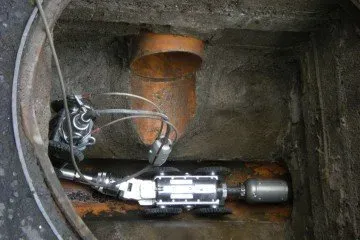
Which Manhole Chamber Should the Rat Blocker Go In?
A rat blocker only protects the pipework upstream of where it is fitted. If you have three inspection chambers in your garden or driveway and you put the valve in the wrong one, rats can simply bypass it through an unprotected branch line.
- 1. The Downstream Intercepting Chamber: In most properties, we fit the blocker in the final private inspection chamber just before your pipework leaves your boundary to join the main sewer. Installing it on the inlet side of this final chamber stops rats from entering any of the branch lines feeding your kitchen gullies, downstairs bathroom, or main soil stack.
- 2. Shared Rear Alleyway & Terrace Runs: Across many older terraced streets in Liverpool and coastal properties in Sefton where shifting sandy soils unsettle old clay joints, several houses often share a single lateral drain running across the back yards. If rats are travelling along a shared run from a neighbour's broken drain, we fit the blocker on the dedicated branch line serving your specific house, or fit valves at both ends of your chamber so nothing can enter from upstream or downstream.
- 3. Checking Flow Direction: These valves can be configured for either inlet pipes (where waste enters the manhole) or outlet pipes (where waste leaves the manhole). We always configure the tension springs to match the chamber geometry so we can still lift the manhole lid and retrieve the valve with a steel installation pole during routine maintenance.
How Rats Get From the Drain Into Your Cavity Walls
Fitting a rat blocker in the manhole stops new rats swimming in from the street, but you also need to know how they escaped from the sealed pipe into your house structure in the first place. Rats rarely swim up past the water trap of a downstairs toilet bowl; instead, they find dry, hidden escape points underground:
Uncapped Redundant Pipes (Old Outside Toilets & Extensions)
This is the number one culprit we find on camera surveys. When an older home has had a kitchen extension built over a patio, or an old outside WC demolished decades ago, builders sometimes smash the old toilet pan off and board straight over the floor without sealing the live clay branch pipe underneath. Rats walk straight up that dry, redundant pipe and come out directly underneath your kitchen units or suspended timber floors.
Chewed Plastic Soil Stack Connectors
Where a modern internal toilet connects to the vertical soil pipe inside a boxed-in bathroom corner, plumbers often use flexible concertina pan connectors. Rats climb the dry internal stack pipe and chew straight through the thin rubber ribs of the connector, stepping out into your bathroom boxing and straight into the ceiling void.
Dropped Rest Bends & Cracked Clay Collars
Where the vertical pipe drops down through your house footings to meet the horizontal underground drain (the rest bend), ground settlement often cracks the clay collar. Rats burrow out through the broken joint into the soft pea gravel surrounding your foundations and climb up inside the outer and inner brick skins of your cavity wall.
When we come out to fit a rat blocker, we run an HD push-rod CCTV camera up the lines first. If we find a broken joint under the footings or an old redundant branch line, we can either seal it permanently with a no-dig resin patch liner or cap off the disused junction so the breach is completely closed.
Important Rule: Making Sure You Don't Trap Rats Inside
One question customers always ask is: "If you put a one-way valve in the drain today, won't it trap the rats inside my walls?"
Actually, it works the opposite way—and that is the whole beauty of a one-way flap. Rats living inside your loft or cavity walls do not stay there all day; they have to travel back down into the wet sewer system every single day to drink water and forage.
Because the stainless-steel rat blocker opens outwards in the direction of the water flow, any rats still inside your house can push the flap open from the inside and walk out into the main street sewer as normal. Once that flap drops shut behind them, they can never get back in. Within 48 to 72 hours of fitting the blocker, the rats naturally vacate the building without dying under your floorboards and causing a foul smell.
Related Services & Guides
Further reading on drain repairs, camera inspections, and permanent vermin proofing.
Drain Rat Blockers & Vermin Control in Southport
Stop rats entering your Southport home via the sewers. Expert installation of stainless steel rat blockers and CCTV drain surveys. Call 01704 331179.
Who Is Responsible for a Blocked Drain or Sewer?
Find out if a blocked drain is your private responsibility or covered by United Utilities. Learn how to check shared runs and manholes before you pay.
How Much Does a Pre-Purchase Drain Survey Cost?
Find out what affects the price of a pre-purchase CCTV drain survey, what a technical report includes, and how buyers use findings to negotiate house prices.
Drain Relining vs Digging Up: Which Fix Is Best?
Find out when a cracked drain can be fixed with a no-dig resin liner and when a collapsed pipe needs open-trench excavation, with honest cost advice.
How Often Do Commercial Drains Need Cleaning?
Find out how often commercial grease traps, stack pipes, and car park gullies need cleaning to avoid kitchen shutdowns and water authority fines.
Need a Stainless-Steel Rat Blocker Fitted?
Speak directly to an experienced engineer today. We can camera-check your drains, pinpoint where rats are getting out, and fit a permanent stainless-steel non-return valve on the same visit.